Intro to 3D Laser Scanning: What It Is and Why It Issues
3d Laser Scanning Training Courses .3D laser scanning is a transformative innovation that has actually revolutionized the means we record and evaluate the real world. From commercial style to heritage preservation, this technology supplies a precise and efficient way to create thorough digital models of objects, structures, and landscapes. In a progressively digital age, recognizing the principles of 3D laser scanning is vital for industries and specialists looking for to remain in advance of the curve. This article gives an extensive intro to 3D laser scanning, exploring what it is, why it matters, and the different ways it is being utilised across various sectors.
What Is 3D Laser Scanning?
At its core, 3D laser scanning is an innovation that captures the shape of physical objects utilizing laser light. It works by discharging laser beams that jump off surface areas and return to the scanner, which then calculates the distance based upon the moment it considers the light to return. This process, called time-of-flight measurement, allows the scanner to create accurate three-dimensional depictions of the checked things or environment.
These depictions are commonly described as factor clouds, which are thick collections of information factors in a three-dimensional coordinate system. Each point in the cloud represents an exact area externally of the checked object, catching not just its form but likewise its texture and colour (depending on the sort of scanner used). As soon as captured, these factor clouds can be processed and exchanged 3D versions making use of specialist software.
The Elements of a 3D Laser Scanner
A common 3D laser scanner consists of a number of key parts:
-
Laser Emitter: This part produces the laser beam of light that is predicted onto the object or surface being checked.
-
Receiver/Detector: The receiver spots the laser light as it mirrors back from the object. It measures the time taken for the light to return, which is after that utilized to calculate the distance in between the scanner and the things.
-
Revolving Mirror: In lots of scanners, a turning mirror is used to direct the laser beam of light across the item. This permits the scanner to catch data from different angles, guaranteeing that the entire surface area of the item is covered.
-
Control System: The control system manages the procedure of the scanner, including the timing of the laser pulses and the activity of the turning mirror.
-
Data Processing Software Application: Once the raw data is collected, it needs to be processed into a functional style. Specialized software is used to convert the point cloud information right into a 3D version, which can after that be evaluated, customized, or integrated into various other electronic systems.
Sorts Of 3D Laser Scanners
There are several sorts of 3D laser scanners, each matched to different applications:
-
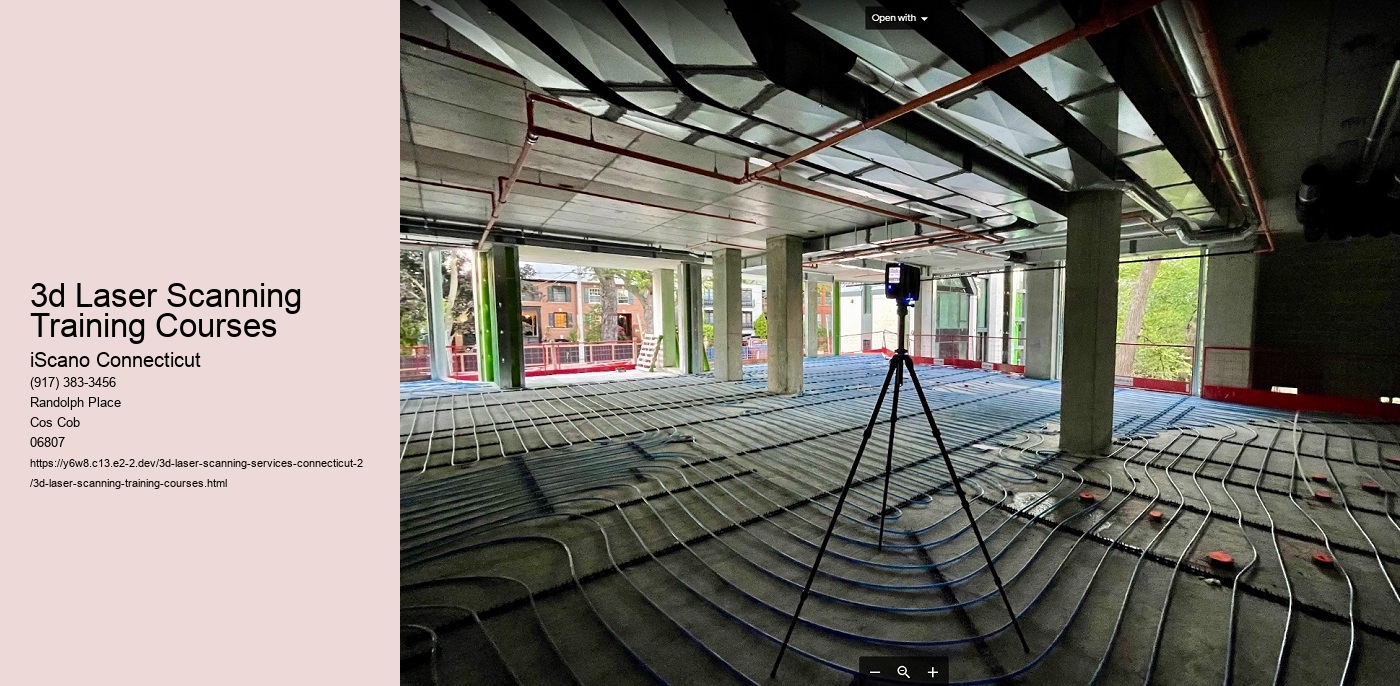
Terrestrial Laser Scanners (TLS): These scanners are usually used for massive jobs such as checking buildings, bridges, or landscapes. They are installed on a tripod and can capture information from long distances, making them suitable for exterior use.
-
Handheld Laser Scanners: As the name suggests, these scanners are portable and can be made use of to capture smaller sized items or areas that are challenging to reach with a bigger scanner. They are commonly used in markets such as auto, aerospace, and production.
-
Airborne Laser Scanners (LiDAR): LiDAR (Light Detection and Ranging) is a kind of laser scanning that is commonly placed on airplane or drones. It is used to catch large-scale topographical information, such as woodlands, mountains, or urban areas.
-
Structured Light Scanners: Unlike conventional laser scanners that utilize a single laser beam of light, structured light scanners project a pattern of light onto the things. By analysing the deformation of the pattern, the scanner can create a 3D version. These scanners are usually made use of for in-depth inspections in manufacturing and quality control.
Why 3D Laser Scanning Issues
The importance of 3D laser scanning depends on its capacity to give extremely accurate and thorough representations of the physical world. This capacity has significant effects throughout different industries and applications:
-
Precision and Precision: 3D laser scanning can capture countless information points per 2nd, resulting in extremely outlined and exact models. This degree of precision is important in markets such as engineering, architecture, and construction, where also minor errors can have substantial repercussions.
-
Efficiency: Typical techniques of measurement and paperwork can be time-consuming and labour-intensive. 3D laser scanning improves the procedure by capturing extensive information in a portion of the moment. This efficiency is particularly beneficial in large tasks, such as surveying a building site or recording a historical site.
-
Non-Invasive Data Collection: 3D laser scanning is a non-contact method, indicating that it does not need physical communication with the things being scanned. This is especially essential when managing fragile or hard to reach things, such as social heritage websites, historical artefacts, or unsafe environments.
-
Flexibility: 3D laser scanning is a versatile modern technology that can be applied in a variety of markets, from production and building to healthcare and amusement. Its capability to record complex geometries makes it indispensable in any type of area that needs in-depth spatial evaluation.
-
Improved Visualisation and Analysis: The 3D models created by laser scanning can be made use of for visualisation, simulation, and evaluation. For example, engineers can use these versions to create online walkthroughs of structures, while engineers can mimic exactly how a framework will certainly behave under various conditions.
Introduction of 3D Laser Scanning Technology
To understand the complete impact of 3D laser scanning, it's important to discover the modern technology behind it and just how it has actually progressed for many years.
The Evolution of 3D Laser Scanning
3D laser scanning has its origins in the early 1960s, when the first laser was established. At first, lasers were used largely for clinical research and military applications. Nevertheless, as technology advanced, the possibility for using lasers to measure distances and capture detailed spatial data emerged.
In the 1980s, the first commercial laser scanners were introduced, noting a substantial turning point in the advancement of 3D scanning technology. These very early scanners were huge, pricey, and limited in their capacities, however they prepared for future developments.
The 1990s saw considerable enhancements in laser scanning technology, with the introduction of even more compact and budget-friendly scanners. This duration also saw the advancement of software program that could process point cloud information right into 3D models, making the technology extra obtainable to a wider variety of markets.
Today, 3D laser scanning is a mature technology that remains to progress. Advances in computing power, data storage space, and software algorithms have actually made it feasible to catch and process larger and a lot more complex datasets. At the very same time, the growth of new scanning innovations, such as portable and drone-mounted scanners, has increased the variety of applications for 3D laser scanning.
Key Technologies in 3D Laser Scanning
Several vital innovations are indispensable to the procedure of 3D laser scanners:
-
Time-of-Flight (ToF) Measurement: This is the most common method made use of in 3D laser scanning. It includes determining the time it takes for a laser light beam to take a trip to a things and back to the scanner. By determining the time-of-flight, the scanner can establish the range to the things and create a 3D point.
-
Stage Shift Measurement: In stage shift measurement, the scanner sends out a continual laser light beam that is modulated in amplitude. The stage difference between the discharged and received light is made use of to compute the distance. This method is typically made use of in high-precision scanners and can attain better precision than time-of-flight dimension.
-
Triangulation: Triangulation-based scanners make use of a laser beam and a video camera to record data. The laser forecasts a point or line onto the things, and the electronic camera records the mirrored light. By analysing the angle between the laser, the object, and the camera, the scanner can figure out the range and produce a 3D point.
-
Structured Light: Structured light scanners forecast a pattern of light (such as red stripes or dots) onto the things. The deformation of the pattern is caught by a camera, and the information is made use of to compute the 3D shape of the item. Structured light scanners are understood for their high precision and are frequently utilized in applications calling for comprehensive surface area dimensions.
-
Multi-Sensor Integration: Some advanced 3D laser scanners incorporate multiple sensors, such as video cameras, GPS, and inertial dimension devices (IMUs), to improve the precision and flexibility of the information. For example, LiDAR systems made use of in autonomous vehicles usually integrate laser scanning with various other sensors to develop a thorough map of the setting.
Applications of 3D Laser Scanning
The applications of 3D laser scanning are huge and varied, with the technology being made use of in numerous sectors:
-
Design and Construction: 3D laser scanning is widely made use of in the style and building markets to produce accurate as-built models of buildings and infrastructure. These models can be used for layout, remodelling, and maintenance purposes, as well as for clash detection in complicated tasks.
-
Manufacturing: In production, 3D laser scanning is made use of for quality control, reverse engineering, and prototyping. The capability to catch accurate measurements of components and assemblies ensures that products satisfy layout requirements and feature as meant.
-
Social Heritage and Archaeology: 3D laser scanning plays a crucial role in preserving social heritage sites and artefacts. By producing in-depth digital records, scientists can study and evaluate these treasures without taking the chance of damage. Additionally, 3D models can be made use of for online reconstruction and visualisation, enabling the public to experience archaeological sites in new ways.
-
Healthcare: In medical care, 3D laser scanning is made use of for a variety of applications, including developing custom prosthetics, orthotics, and oral appliances. The technology is likewise made use of in medical imaging and surgical procedure preparation, where exact 3D versions of people' ' makeup are essential for effective outcomes.
-
Enjoyment and Media: The show business has actually welcomed 3D laser scanning for creating sensible visual effects, computer animations, and virtual reality experiences. The innovation allows filmmakers and video game designers to capture real-world environments and characters, bringing a new level of realistic look to their job.
-
Transportation and Framework: 3D laser scanning is used in transportation and facilities tasks to survey roads, bridges, tunnels, and railways. The information collected can be utilized for planning, style, and upkeep, guaranteeing that these crucial structures continue to be risk-free and useful.
-
Environmental Monitoring: LiDAR, a type of 3D laser scanning, is widely made use of in environmental monitoring and natural resource administration. It is utilized to map woodlands, procedure plants development, screen seaside erosion, and assess the effect of natural catastrophes.
The Future of 3D Laser Scanning
As modern technology remains to advancement, the future of 3D laser scanning looks encouraging. Several of the key trends and advancements that are most likely to shape the future of this modern technology consist of:
-
Increased Automation: The integration of artificial intelligence (AI) and machine learning into 3D laser scanning systems will make it possible for greater automation in information collection and processing. This will lower the need for hands-on treatment and increase the speed and efficiency of scanning procedures.
-
Miniaturisation and Portability: As scanners lessen and much more portable, they will be much easier to release in a wider series of settings. This will certainly open up brand-new opportunities for applications in areas such as space exploration, disaster reaction, and wearable innovation.
-
Real-Time Processing: Advancements in computing power and information storage space will enable real-time processing of point cloud data, enabling customers to check out and analyse 3D models on the place. This will be particularly useful in markets such as building and construction and surveying, where instant responses is crucial.
-
Integration with Other Technologies: The future of 3D laser scanning will likely entail greater integration with various other innovations, such as drones, robotics, and the Internet of Things (IoT). This will enable much more thorough data collection and analysis, bring about brand-new understandings and applications.
-
Democratisation of 3D Scanning: As 3D laser scanning technology comes to be more economical and available, it will certainly be embraced by a more comprehensive series of markets and professionals. This democratisation will drive development and broaden the use instances for 3D scanning, making it a vital device in the digital age.
Verdict
3D laser scanning is a powerful and functional innovation that has changed the means we capture and analyse the physical world. Its capacity to provide exact, detailed, and effective dimensions has actually made it an important device throughout a wide variety of sectors, from construction and manufacturing to healthcare and social heritage. As the modern technology remains to develop, we can expect to see even higher advancements in automation, portability, and assimilation, paving the way for new applications and possibilities. Whether you're an engineer, designer, archaeologist, or filmmaker, recognizing 3D laser scanning is essential for remaining ahead in a significantly digital globe.